
Simple intake drives adoption
Drive company-wide adoption with Dynamic Intake — accessible from a single URL, embedded directly in Slack or Teams, so employees can submit requests without ever leaving the tools they already use.

Easier for the requester
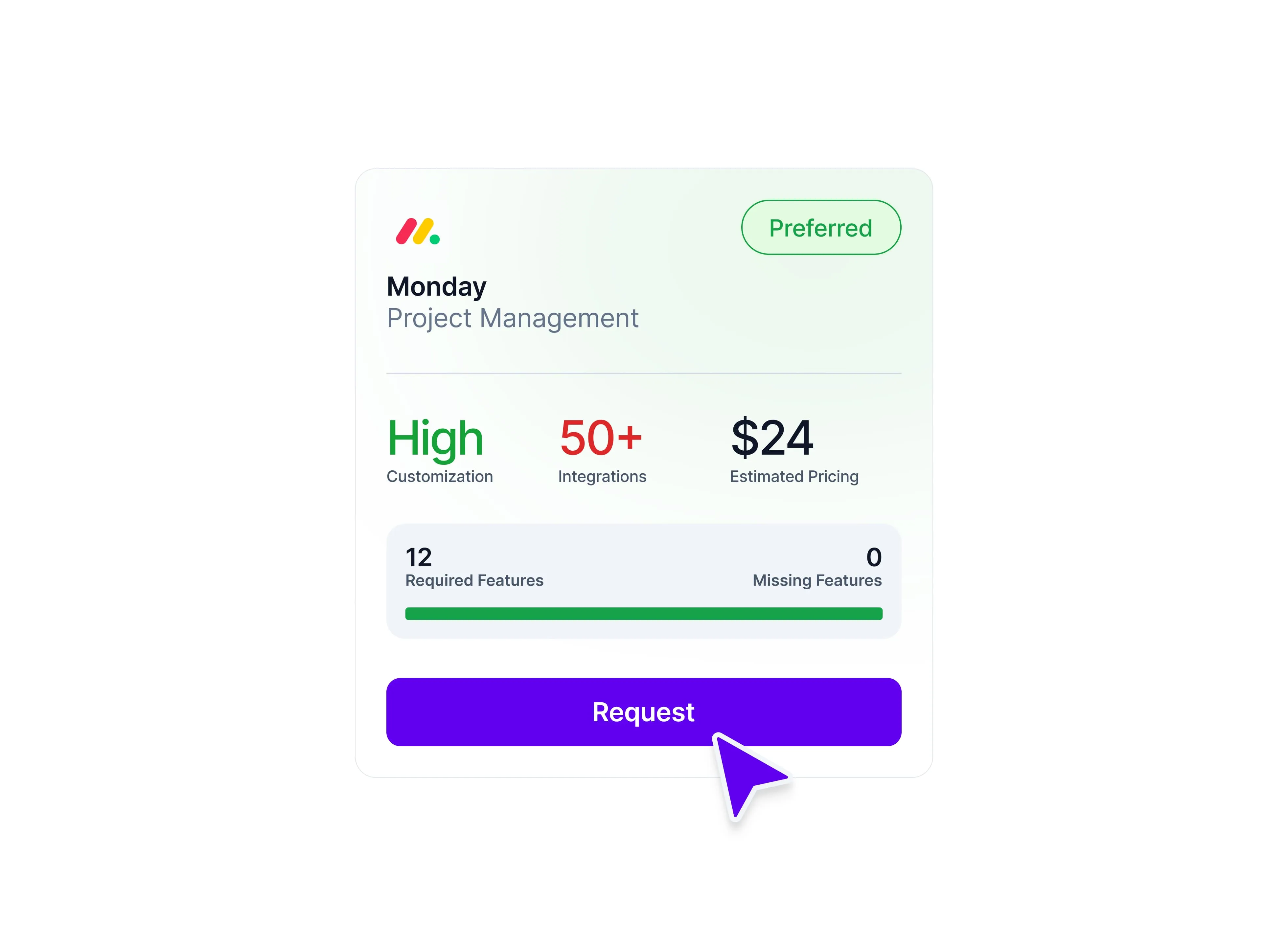
Preferred vendors

Smart, dynamic, conversational intake
Vertice AI

.webp)
Workflow Builder
.webp)
Product Overview
See how simple procurement can be
Let us show you how to halve your cycles and cut costs by 20%.
The need-to-knows about Vertice
Intake management software helps organizations streamline and automate request submissions, approvals, and data capture. Vertice’s dynamic intake adapts to each purchase request with smart, customizable forms, ensuring requesters only see relevant fields, supporting automated routing, and improving efficiency across the entire submission workflow.
Yes – the no-code intake form within Vertice’s intake management software includes smart document ingestion, automatically scanning uploaded files so requests can be launched immediately, making request management faster and more efficient.
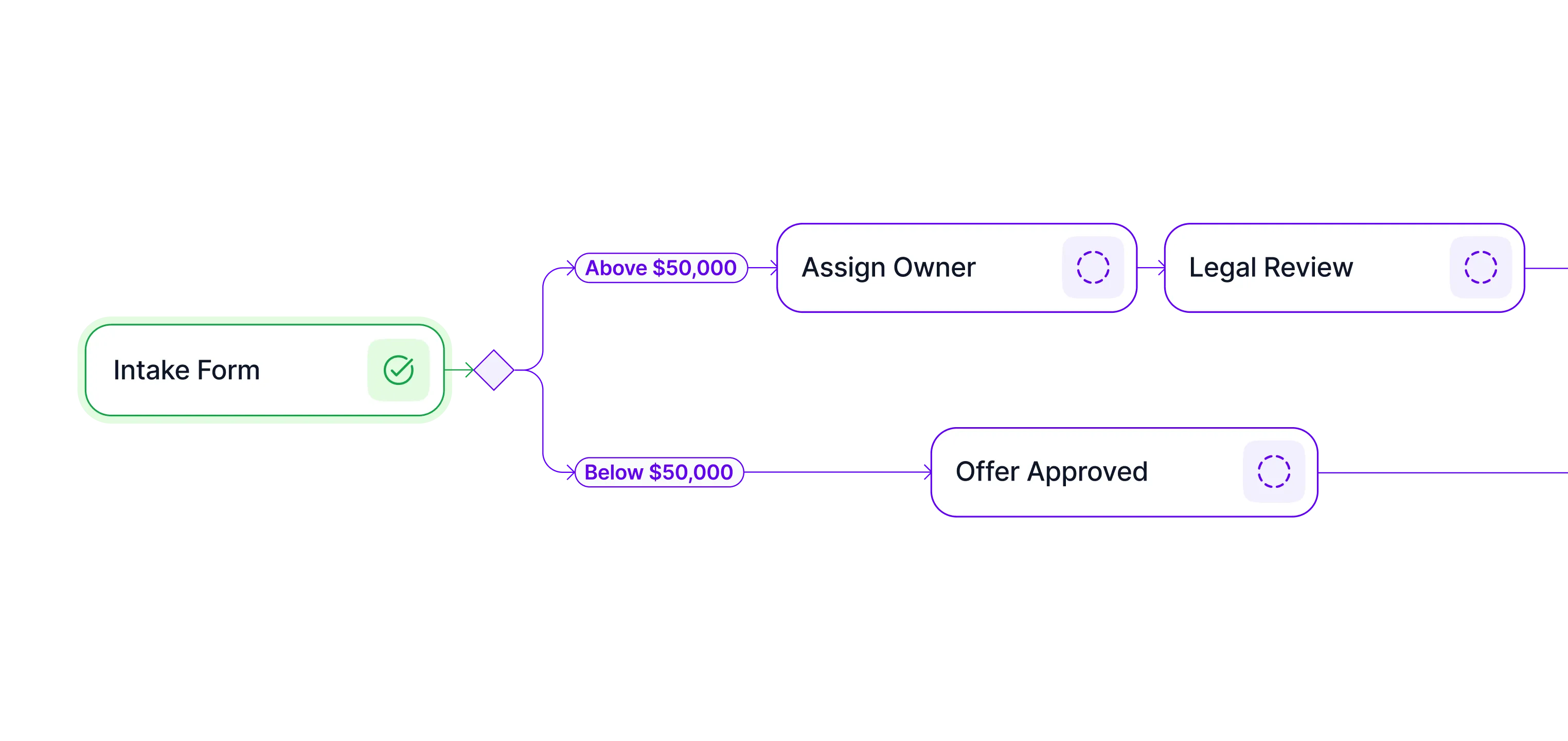
Once submitted, requests are automatically routed into the appropriate approval workflow. Vertice uses the information collected in the intake form – such as request type, cost, department, and any uploaded documents – to trigger the right tasks and approvals, supporting efficient, automated routing throughout the process.
Absolutely. Vertice’s dynamic intake form is fully customizable, allowing you to specify which fields to collect, enforce compliance with internal policies, and streamline workflows through automated process management.
An intake management platform with dynamic intake streamlines request tracking, reduces manual errors, and speeds up approvals by automatically routing submissions into the appropriate workflows. It also ensures stakeholders such as legal, procurement, IT, compliance and finance consistently capture the data that they need to progress approval quickly, improving efficiency and supporting better decision-making.
By using adaptive forms, dynamic intake ensures requesters only see what’s relevant, reducing confusion and minimizing unnecessary back-and-forth.
Intake management sits at the start of the procurement workflow. When a team member raises a purchase request, the software captures the required information, routes it to the right approvers based on pre-set rules and tracks progress until resolved. This replaces manual emails and spreadsheet logs with a structured approval workflow that every stakeholder can see in real time. Vertice’s Insights Hub data shows that teams using automated intake routing cut cycle times by an average of 27%.
A purchase request (or requisition) is an internal document raised by a team member asking for approval to buy something. Once approved it becomes a purchase order – the formal instruction sent to a vendor. Vertice’s intake management software handles request management throughout this process, capturing the requisition, routing it for approval and generating the data needed to raise a purchase order – all in a single system. Data can also flow into your finance stack via ERP integration through Vertice’s open API, removing manual re-entry.
By routing every purchase request through a structured procurement intake process, your team gains real-time visibility into what is being requested, approved and committed before spend happens. Vertice’s spend management layer links intake data to budget commitments and pricing benchmarks from the Vertice Insights Hub, so approvers can see whether proposed SaaS vendor spend is in line with market rates. Standardized intake also makes sourcing decisions more informed, so teams enter negotiations with context rather than guesswork.
Vertice gives your teams a single, structured way to submit and manage procurement requests, so nothing gets lost in emails or ad-hoc forms. Each request enters a guided procurement intake process that captures the right details up front, applies your policies, and automatically routes it through the right steps. This keeps procurement teams aligned and creates a consistent, repeatable procurement workflow that moves faster and requires far less manual oversight.
By standardizing purchase intake, Vertice captures the critical data needed to support smooth procurement orchestration across the platform. That context makes sourcing processes more informed, keeps contract management timelines on track and helps teams monitor supplier performance with fewer surprises.