


Every purchase, traceable end to end


Commit with confidence
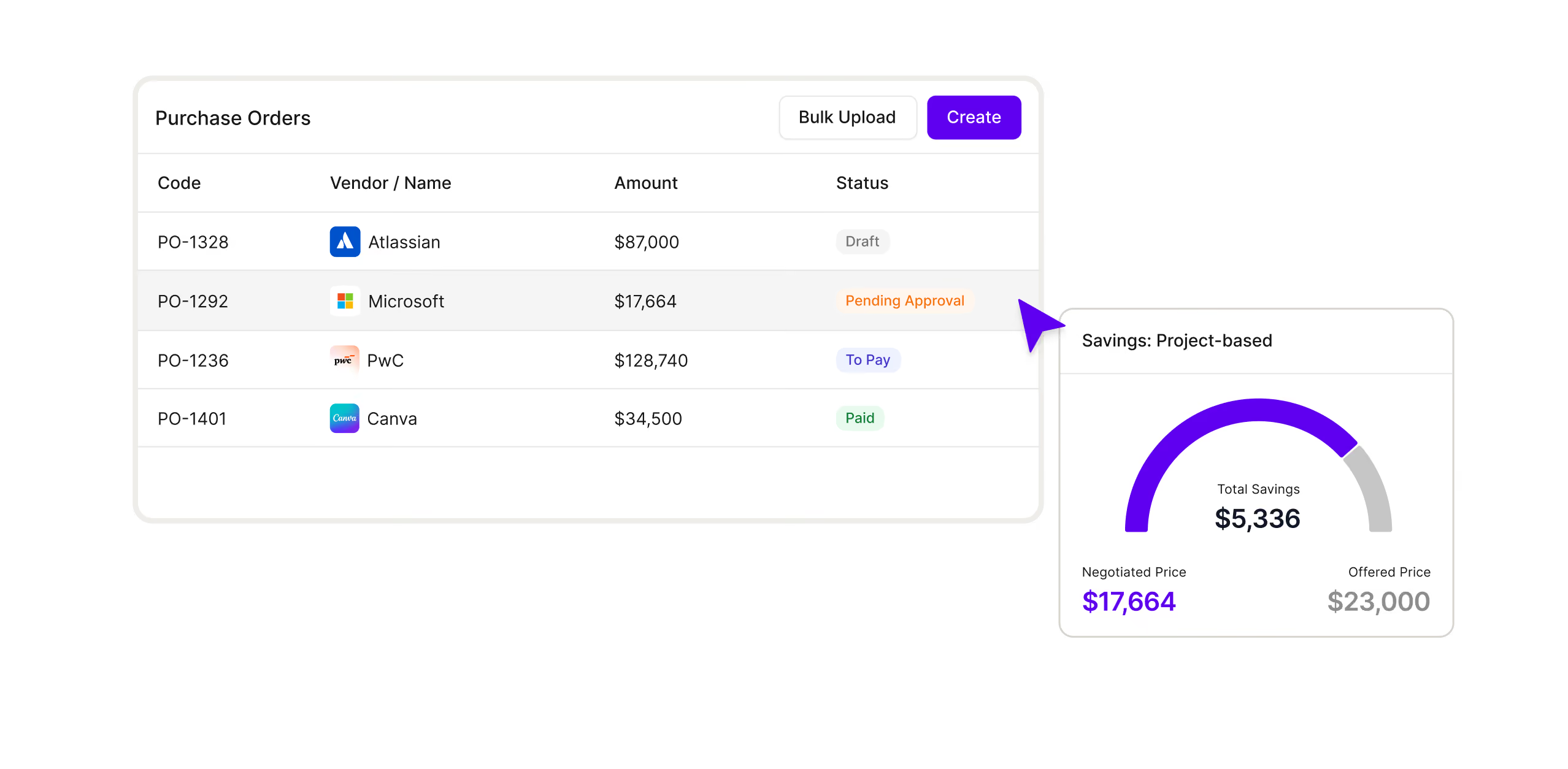



Coded on arrival
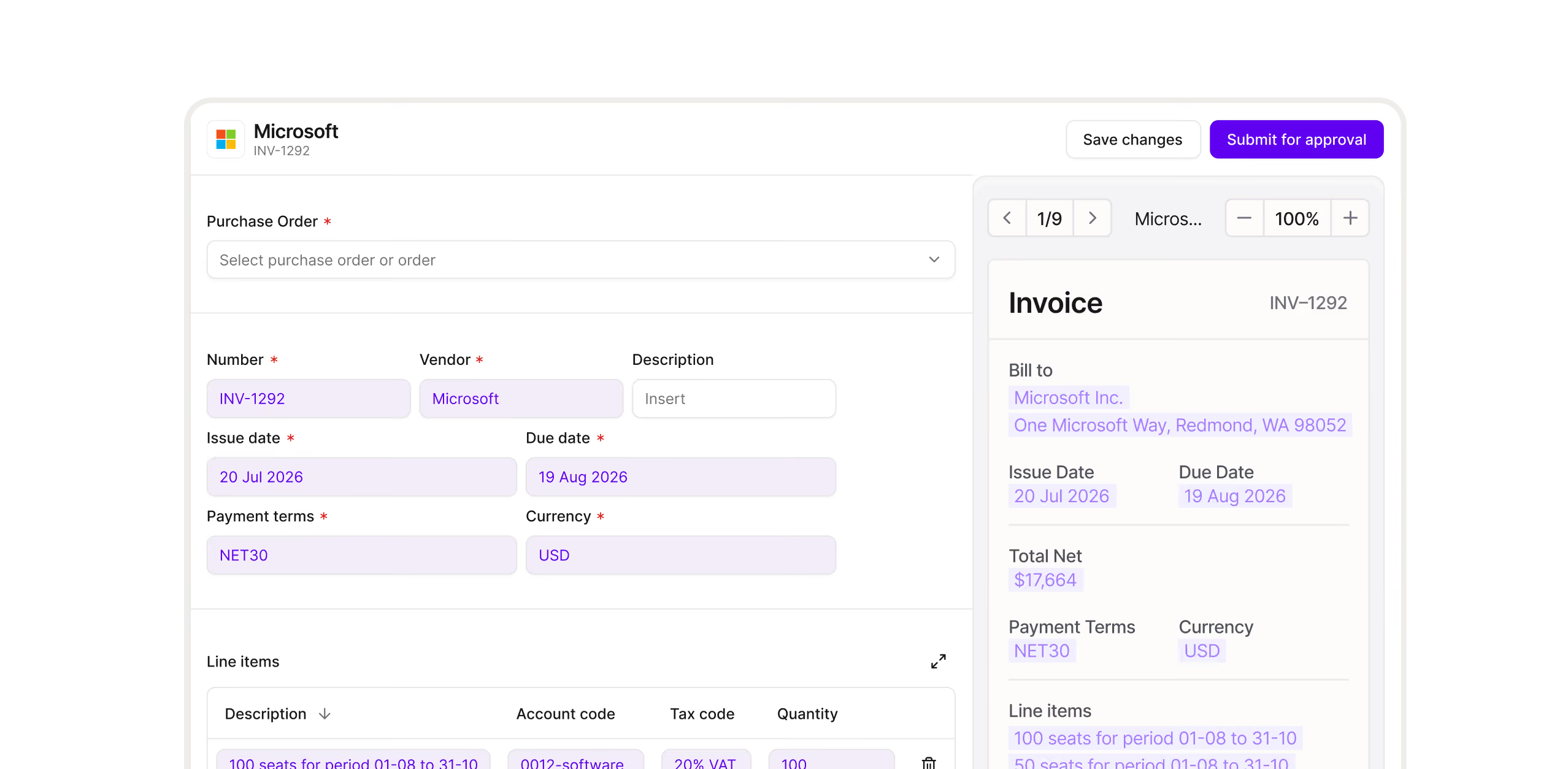
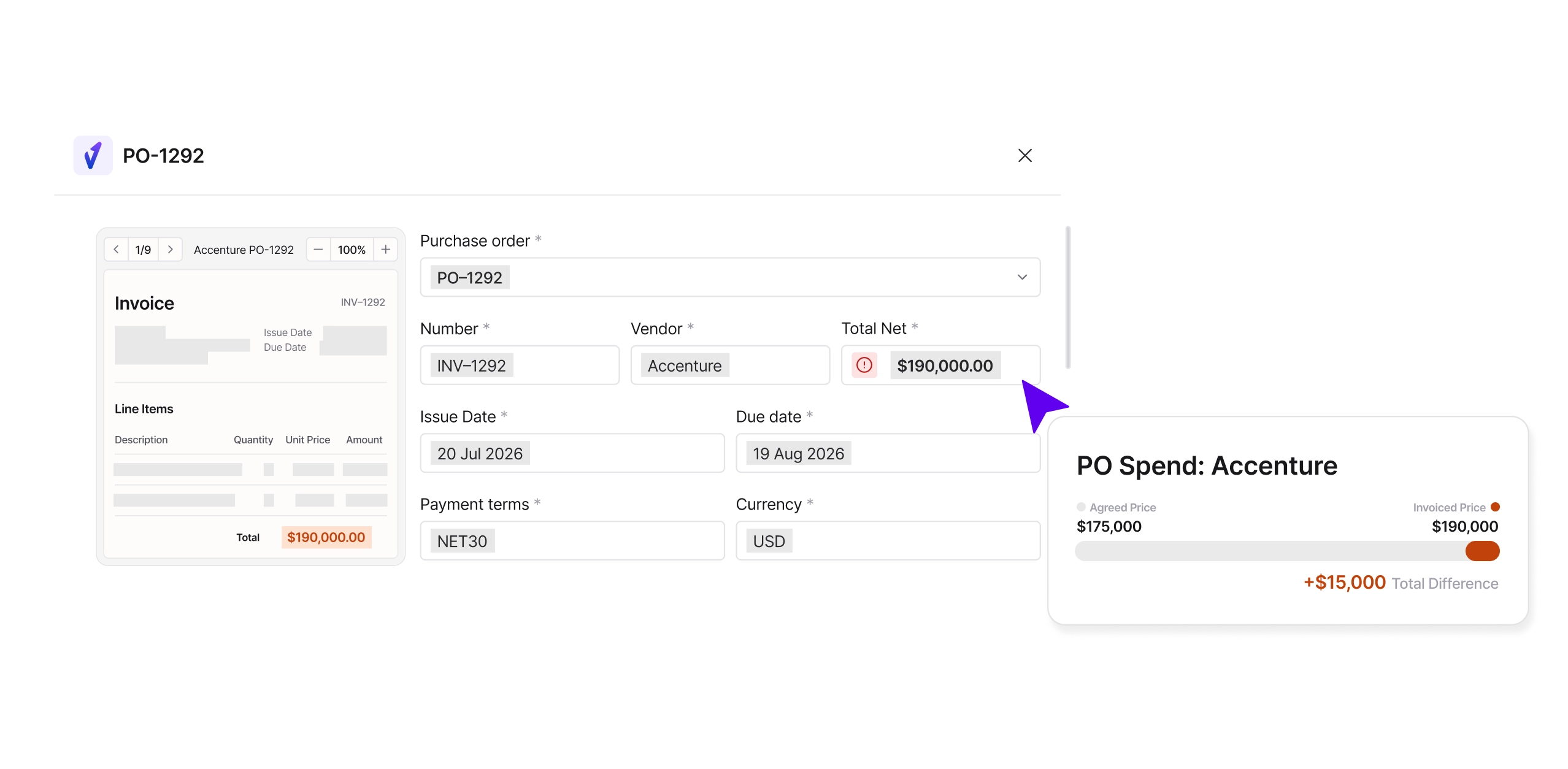
Paid on what was agreed
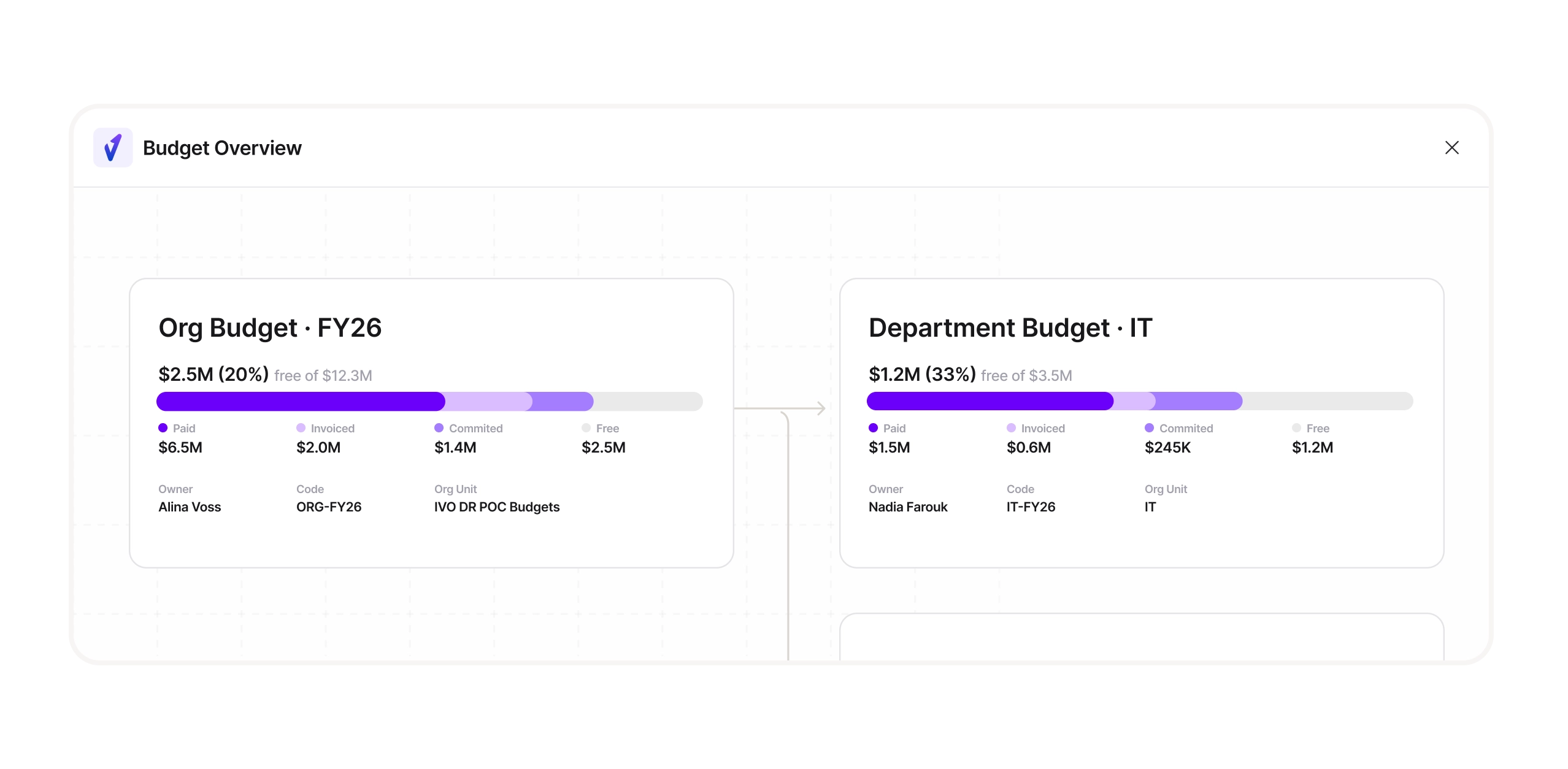
Budget confirmed, before approval
Ready for audit
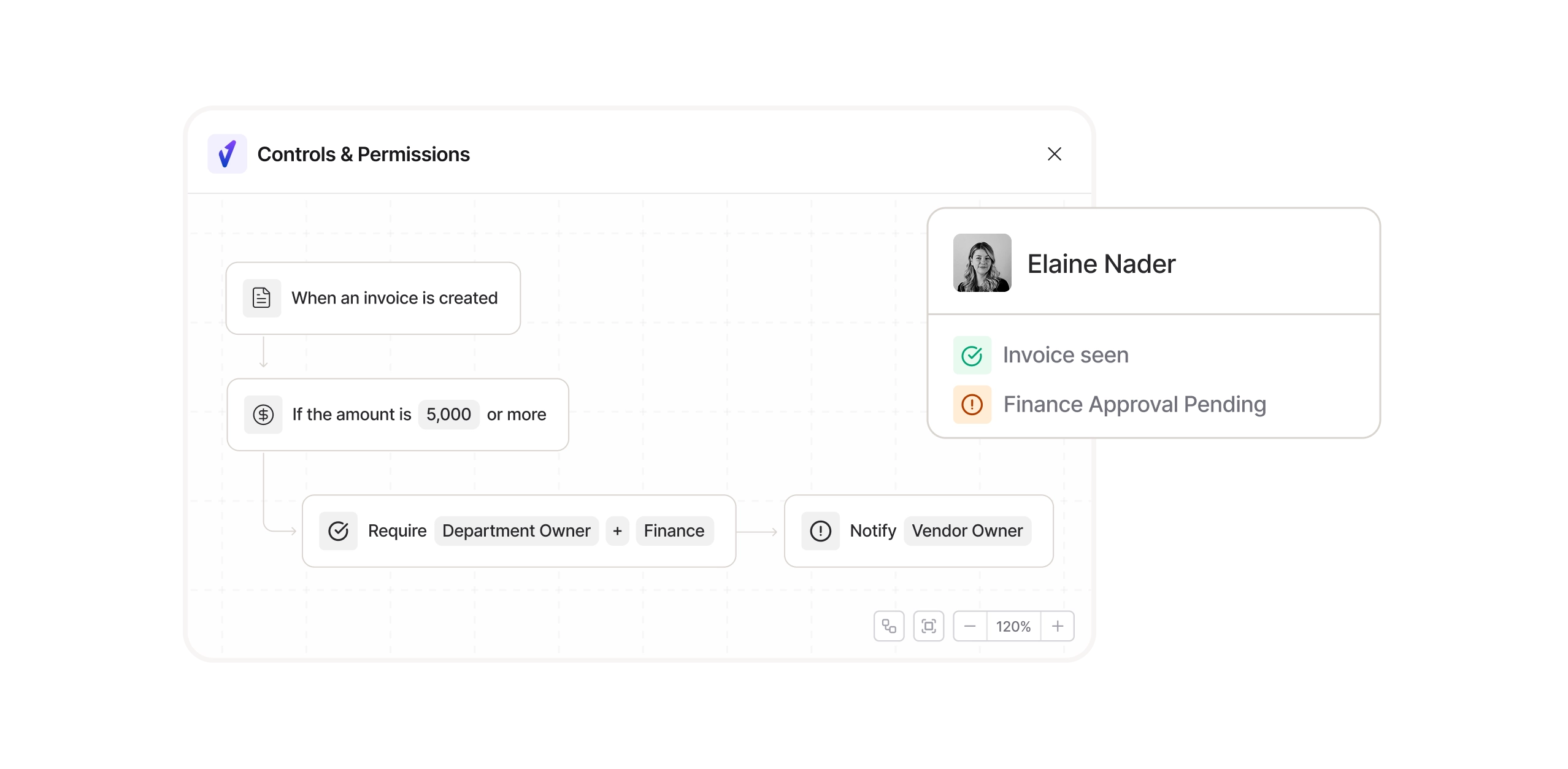
Intelligent procurement, from request to payment
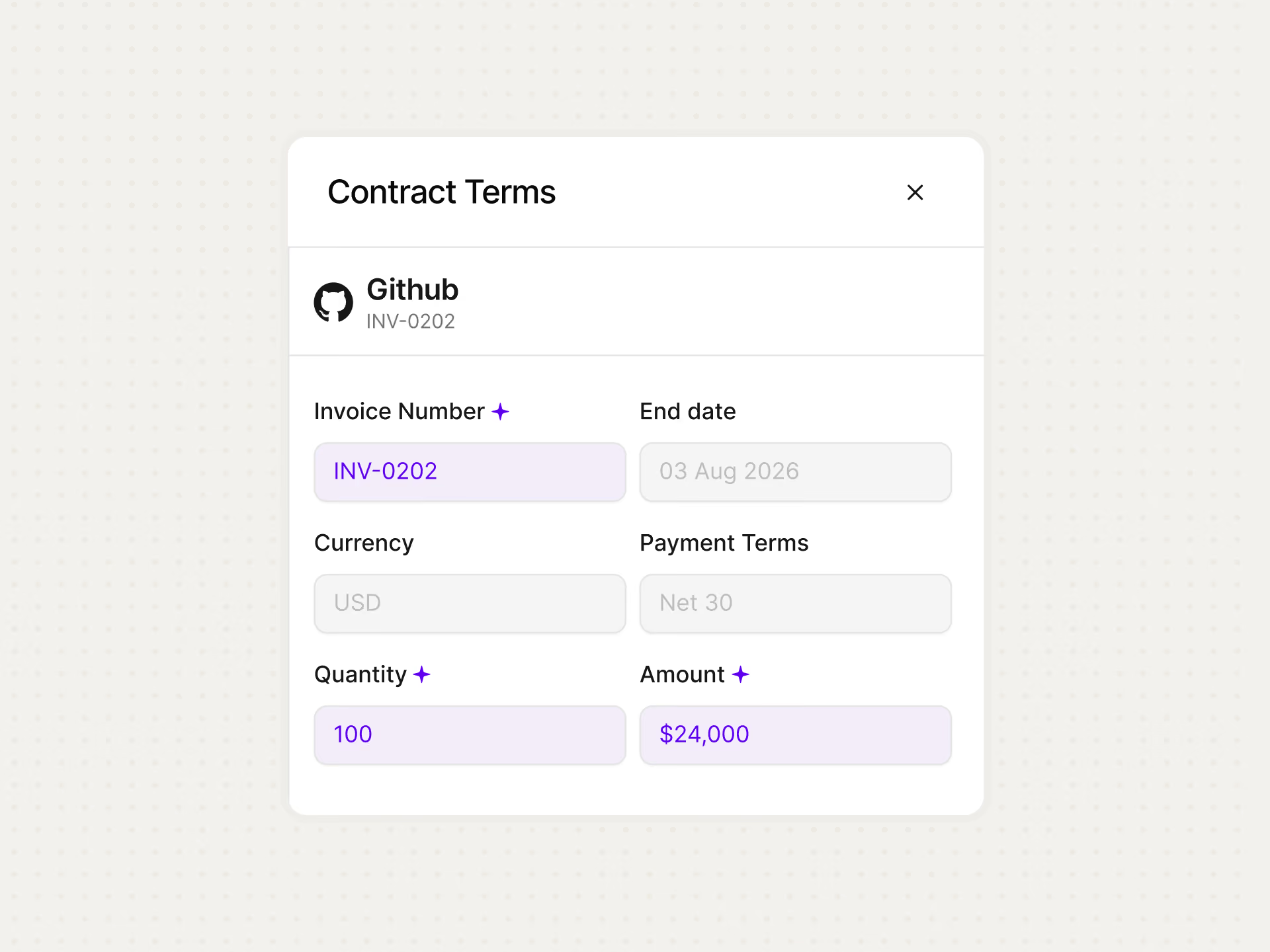
already attached
The contract was negotiated in Vertice, so its terms, pricing and service periods sit on the same record the invoice lands against.
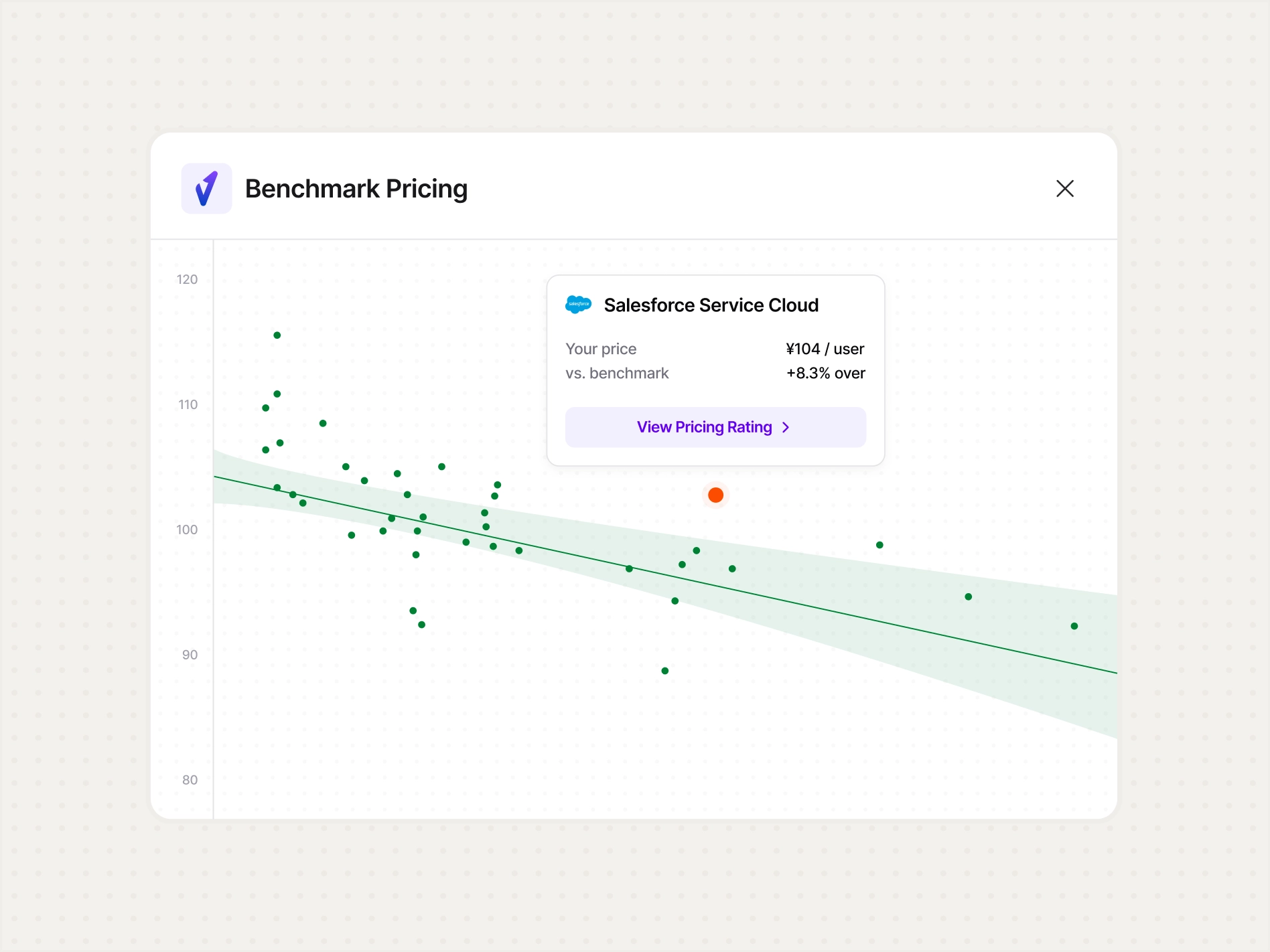
Pricing benchmarks across 32,000+ vendors and 2M+ price points, built from human-negotiated contracts rather than public list prices. The rate on the contract was tested against the market before it was signed.
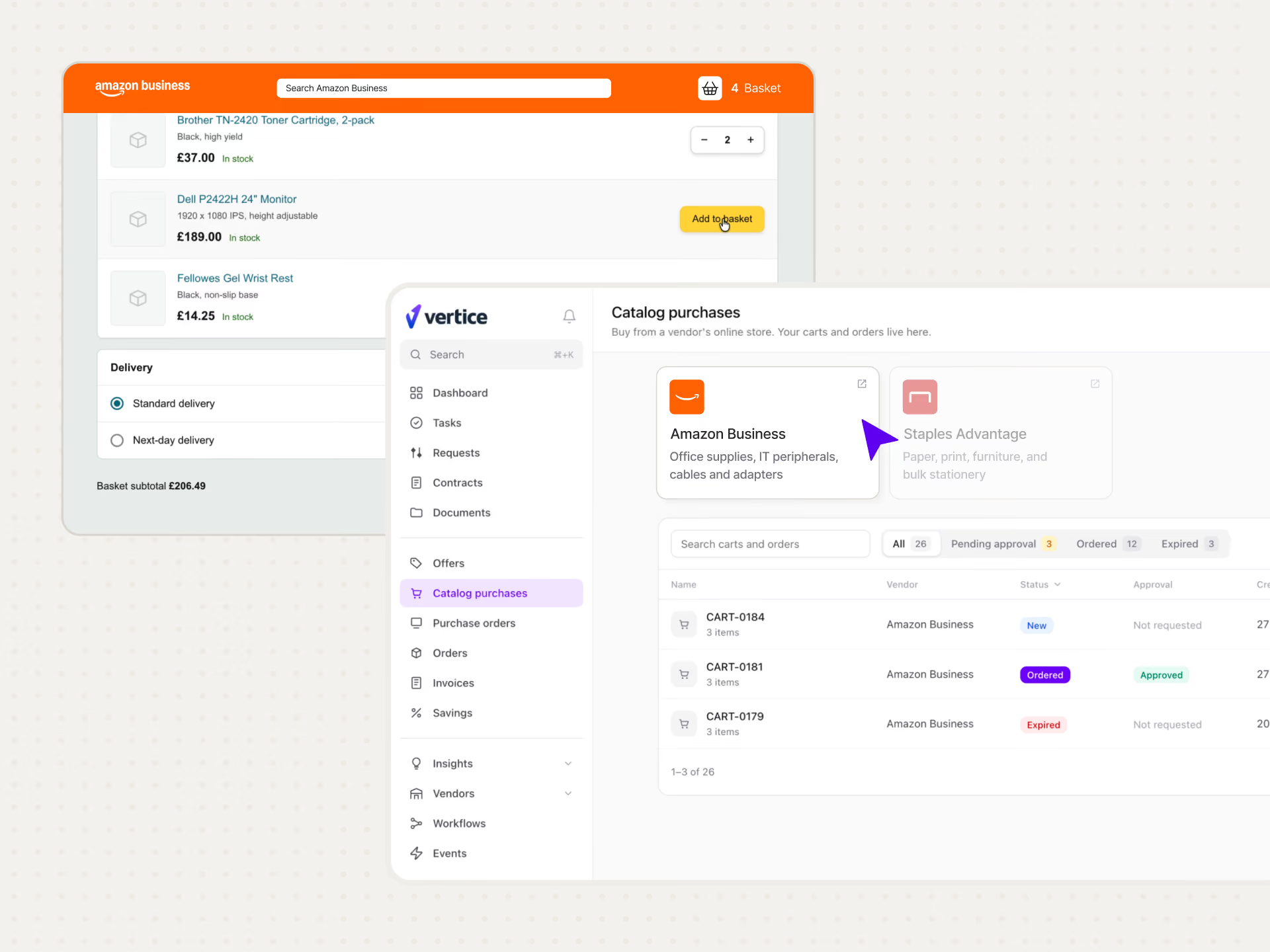
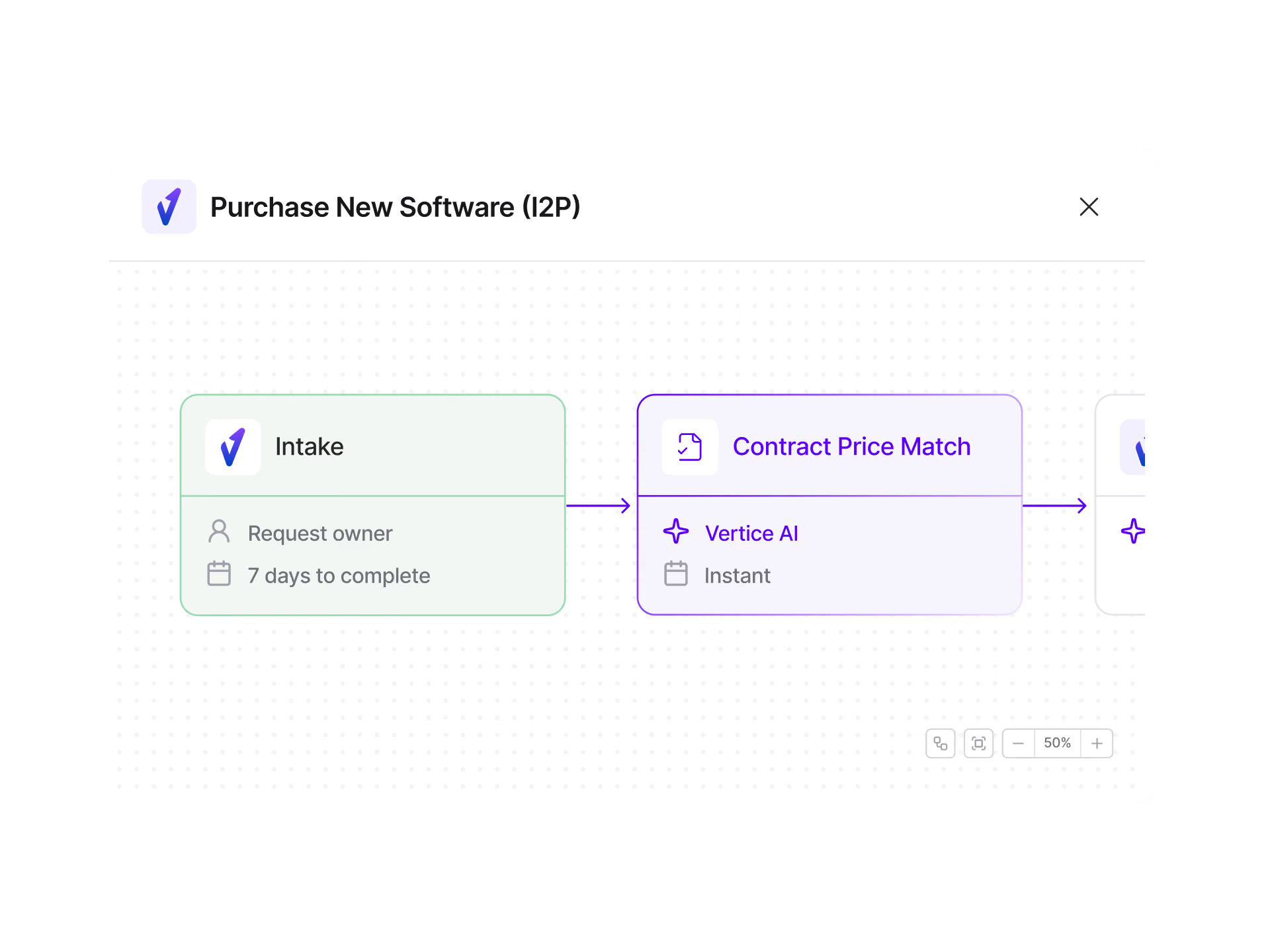
Intake, sourcing, negotiation and contract run on the same platform the invoice lands in, so the price agreed at signature is the price that gets paid.

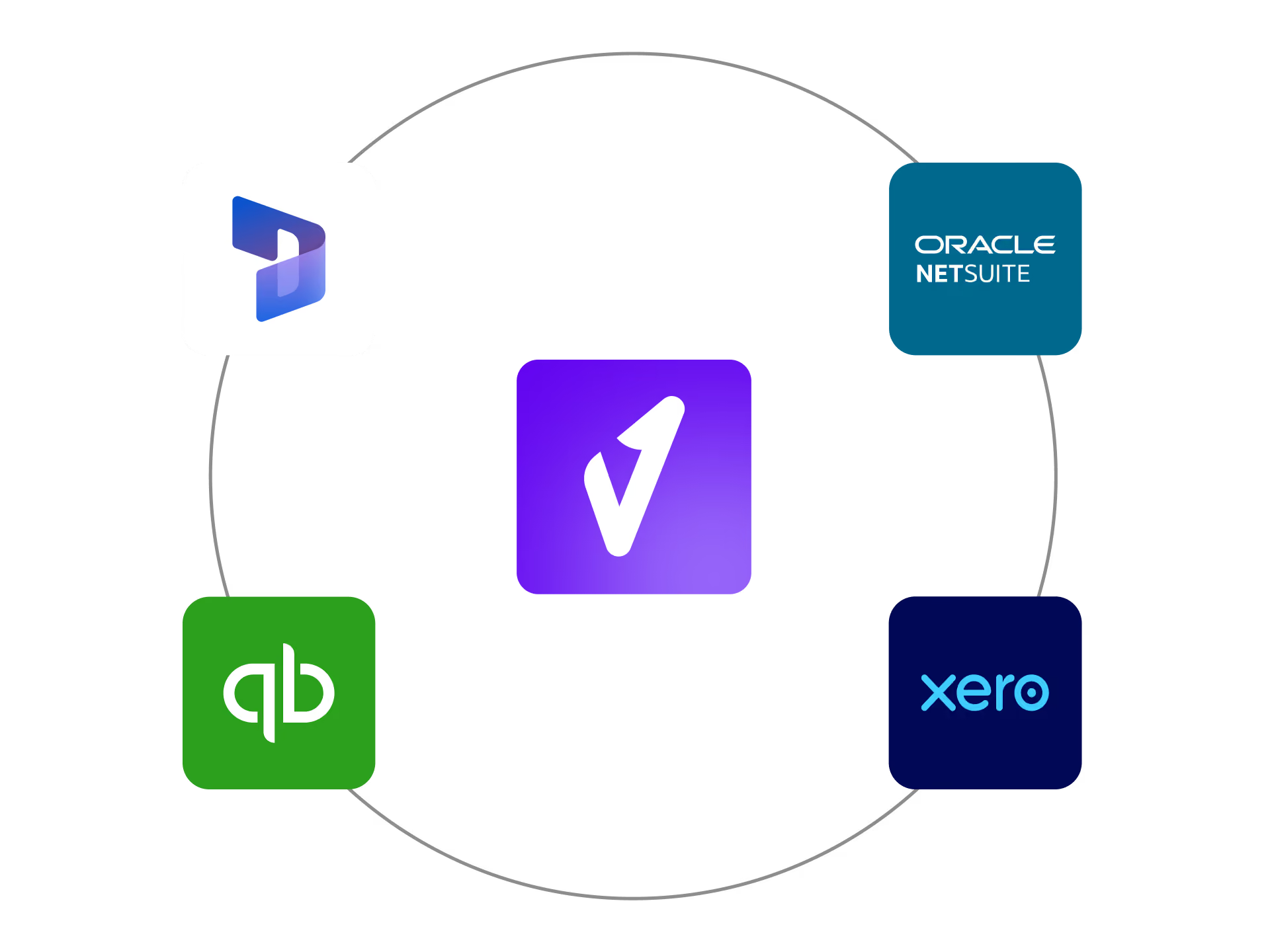
Native ERP integrations keep contracts, purchase orders and invoices reconciled against actual spend. Plus the CLMs, TPRMs, SSO and messaging tools you already use.


Don’t take it from us.
Hear it from them.


The need-to-knows about procure-to-pay
Procure-to-pay is the end-to-end process that connects a purchase request to the payment of the supplier invoice, covering requisition, approval, purchase order, receipt, invoice matching and payment.
Procure-to-pay software brings these steps into one system, so purchasing and accounts payable work from the same record, with visibility and control from purchase requests and purchase requisitions through to invoicing and payment.
The strongest procure-to-pay platforms connect the purchasing decision to the payment, rather than automating invoices in isolation. Most tools meet the invoice for the first time when it arrives, which means they can check the arithmetic but not the decision behind it.
Here is what to evaluate:
- Invoice capture across multiple channels. Invoices arrive from your ERP, by email and through vendor portals. All three should land in one place, with line items and coding extracted automatically rather than keyed.
- Matching against what was actually taken. A purchase order raised months ago for a lump sum tells you the total was authorized. It does not tell you the quantity or rate you ended up consuming. Check what the platform can compare an invoice against beyond that.
- Contract context at the invoice. The most common overpayment is not a maths error, it is an invoice that does not reflect what was actually agreed. Check whether the platform holds the contract terms, or only the purchase order.
- Pricing context. Matching an invoice to a purchase order confirms internal consistency. It does not tell you whether the price was competitive in the first place. Look for whether pricing was tested against the market during negotiation, not just checked at the point of payment.
- Budget visibility from the point of commitment. Budget consumed at purchase order stage is reported too late to act on. Ask how early in the process budget position becomes visible.
- Flexible approval routing with segregation of duties. Routing by amount, department, vendor or any condition your policy requires, with the people who raise, approve and pay properly separated and a full audit trail.
- ERP integration that keeps the ledger current. Reading from your accounting system is table stakes. Ask how changes flow back, and how much still gets keyed twice.
- Spend analysis across purchase orders and invoices. Vendor, category and department views, so patterns are visible rather than anecdotal.
Approval workflows, real-time budget checks and audit trails should come as standard in any procure-to-pay software you shortlist, along with supplier management tools and links to your ERP systems.
Vertice covers each of these, and because contracts are negotiated in the platform, invoices are checked against what was agreed and what the market pays, not only against the purchase order.
Vertice's procure-to-pay is built for finance teams who want control over what gets committed, not just efficiency in how invoices are processed. It is part of Vertice's end-to-end procurement suite rather than a standalone AP tool, so the value compounds when purchasing decisions and payment run on the same platform.
It is a strong fit for:
- Growing companies where invoice volume is outpacing the team. When spend scales faster than headcount, control has to come from the system rather than from people. Line-by-line matching, duplicate detection and exception routing remove the manual work rather than reorganising it.
- Finance teams with reporting and control obligations. Segregation of duties, approval routing and a full audit trail on every record, so the evidence exists without anyone assembling it at quarter end.
- Organizations that need to see committed spend, not just paid spend. Committed, invoiced and paid tracked against budget, so the position is visible while there is still time to act on it.
- Teams already using Vertice for intake, sourcing or contracts. The contract, budget and negotiated price are already on the record when the invoice arrives, so the checks happen without anyone re-keying anything.
For these teams, procure-to-pay software replaces manual invoice processing with automation, cutting maverick spend and giving finance spend control that does not depend on adding headcount.
Accounts payable starts when the invoice arrives. Procure-to-pay starts when someone asks to buy something. AP handles validation, approval and payment, and usually sits with finance. Procure-to-pay covers the whole span, from request through purchase order to payment, so procurement and finance work from the same record instead of handing off between systems.
Source-to-pay is the broader process. It includes everything procure-to-pay covers, plus the strategic sourcing activities that come before it: supplier identification, qualification and contract negotiation.
The procure-to-pay cycle has six core steps: purchase request, approval, purchase order, goods receipt, invoice matching and payment.
Three-way matching compares the purchase order, the goods receipt and the supplier invoice to confirm you are paying only for what was ordered and actually received. Vertice matches invoices to the purchase order and the contract today, with goods receipt as a planned addition.
Most AP tools see the invoice for the first time when it arrives. Vertice already holds the contract that authorized it and the price it was negotiated on, tested against 32,000+ vendors and 2M+ price points before the deal was signed. So the invoice is checked against what was actually agreed, not taken at face value.
That is the main difference between AP automation and procure-to-pay software built on the procurement process itself.
Vertice has native integrations with NetSuite, Xero, QuickBooks and Microsoft Dynamics, among others, keeping contracts, purchase orders and invoices reconciled against actual spend in your ledger.